Here is the moving-industry secret that should be printed on every quote: you pay to move your clutter. Movers price by weight, volume, and hours — which means every box of maybe-someday you load is money spent relocating things you do not want. Declutter before the truck comes and the move gets cheaper, faster, and lighter in every sense. Here is the two-week version we recommend to every client who tells us their moving date.
The math that changes minds
Think of it per box: pack it (time and materials), carry it out, pay to truck it across town or across the country, carry it in, and unpack it into a home where it returns to being ignored — or into a storage unit with its own monthly rent. A modest cull of a few hundred pounds routinely pays for itself in mover hours alone. A serious one can drop you into a smaller truck class entirely.
The cheapest thing to move is the thing you don’t.
The two-week plan
Days 14–11: the easy zones
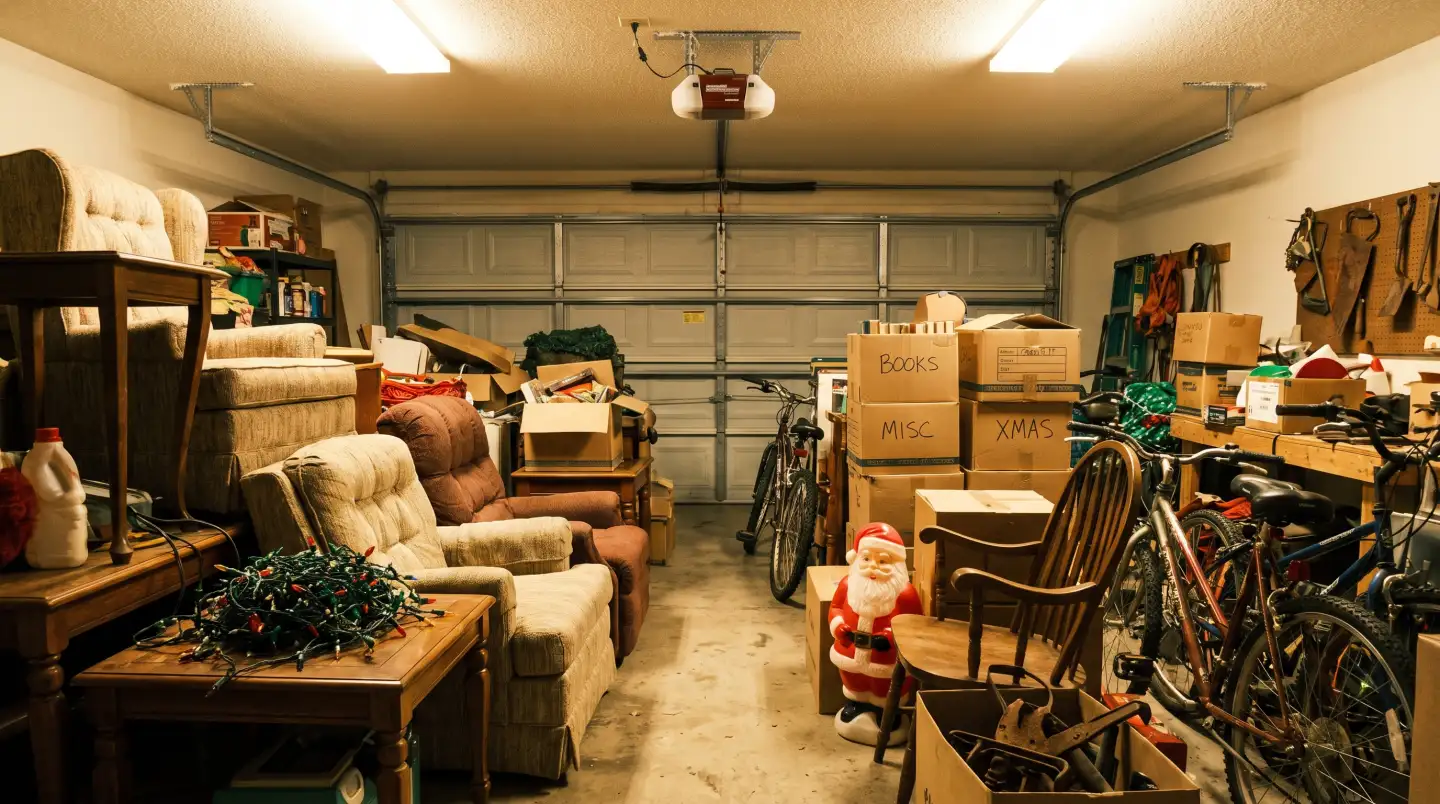
Garage, storage closet, under-sink cabinets, the filing box of manuals for appliances you no longer own. These zones are low-sentiment and high-volume — momentum builders. Sort into four piles: keep, sell, donate, gone. Be ruthless with duplicates; no household needs three phone chargers per drawer.
Days 10–7: clothes, books, kitchen
The one-year rule does honest work here: not worn in a year, not moving with you. Books deserve a real look — they are the densest thing you own, and movers know it. Kitchens hide entire gadget graveyards; if the avocado slicer has never met an avocado, it is decided.
Days 6–4: furniture decisions
Measure the new place before moving day decides for you. The sectional that fits your current living room may not make the new stairwell — and discovering that with paid movers on the clock is the most expensive way to learn. Furniture that is not coming goes on the sell-or-donate track now, while there is still time for pickup scheduling.
Days 3–1: the sweep
Everything undecided defaults to donate. This is the moment for a scheduled junk pickup — one visit takes the donate pile, the gone pile, and the broken bookshelf you were never going to fix.
Moving date set? Get the pre-move pickup on the calendar.
Book the declutter haulSelling: a 5-day rule
Marketplace selling works — with a deadline. Photograph honestly, price to move (check sold listings, not asking prices), and give every item five days. Unsold after five days means the market has spoken: donate it, take the receipt, and reclaim the hallway. An unsold dresser blocking your packing zone is not an asset; it is furniture-shaped friction.
The last 48 hours
- Movers will not take propane tanks, paint, chemicals, or your plants. Plan those separately — hazmat goes to Washoe County’s household hazardous waste options, plants ride with you.
- Stage a “do not load” zone — one closet with tape on the door for documents, meds, chargers, and the kettle.
- Book the post-load-out pickup. The saddest moving-day discovery is the pile that remains after the truck leaves: the worn couch nobody wanted, the garage shelf, the mystery box. A junk pickup scheduled for the day after load-out means you hand over keys to an actually-empty home.
The box problem, solved twice
Boxes bracket every move: never enough at the start, far too many at the end. On the front side, skip buying full price — liquor stores and grocery stores recycle sturdy boxes daily and give them away for the asking, neighborhood groups are full of just-moved households desperate to offload theirs, and one recent mover’s stack outfits your entire kitchen packing.
On the back side, flatten as you unpack and keep the habit: cardboard recycles cleanly and Reno’s single-stream bins take it flattened. If the post-move mountain outgrows the bin — it usually does around box forty — a flattened-cardboard stack rides along free with any junk pickup, or earns its own quick minimum-charge haul. Either way, the new garage does not need to inherit the old garage’s job.
The storage-unit trap
When decluttering stalls, the storage unit whispers: keep everything, decide later. Run the numbers before you sign. A mid-size unit’s monthly rent, multiplied by the national average stay (people routinely keep units for years), frequently exceeds the replacement cost of everything inside it — much of which is furniture that will not fit the next home either. Storage is brilliant for genuine transitions with an end date: a two-month gap between homes, a deployment, a renovation. It is quicksand for “deciding later.” If you cannot name the month the unit empties, you are not storing — you are subscribing to your clutter.
Sentimental stuff, without the guilt
The boxes that stall every move are not the gadgets — they are the kids’ artwork, the inherited china, the t-shirts from races run a decade ago. Three moves’ worth of hard-won tactics: photograph generously (a picture of the macaroni art carries the memory at a millionth of the weight), keep the best and release the rest (one box of the truly great artwork beats six boxes of all of it), and give heirlooms a real decision — used and loved comes with you, stored out of obligation deserves a family conversation about who actually wants it. Guilt is heavy cargo, and the truck charges by the pound.
Renters: the deposit angle
If you rent, the last haul is deposit money. Landlords bill removal of left-behind items at whatever their handyman charges, plus the cleaning delay — routinely more than a pickup costs, subtracted from your deposit without a negotiation. Broom-clean beats “we left a few things” every single time.
However you split the work — sell some, donate plenty, haul the rest — do it before the movers quote you. Your wallet, your back, and whoever carries the book boxes will all notice the difference.