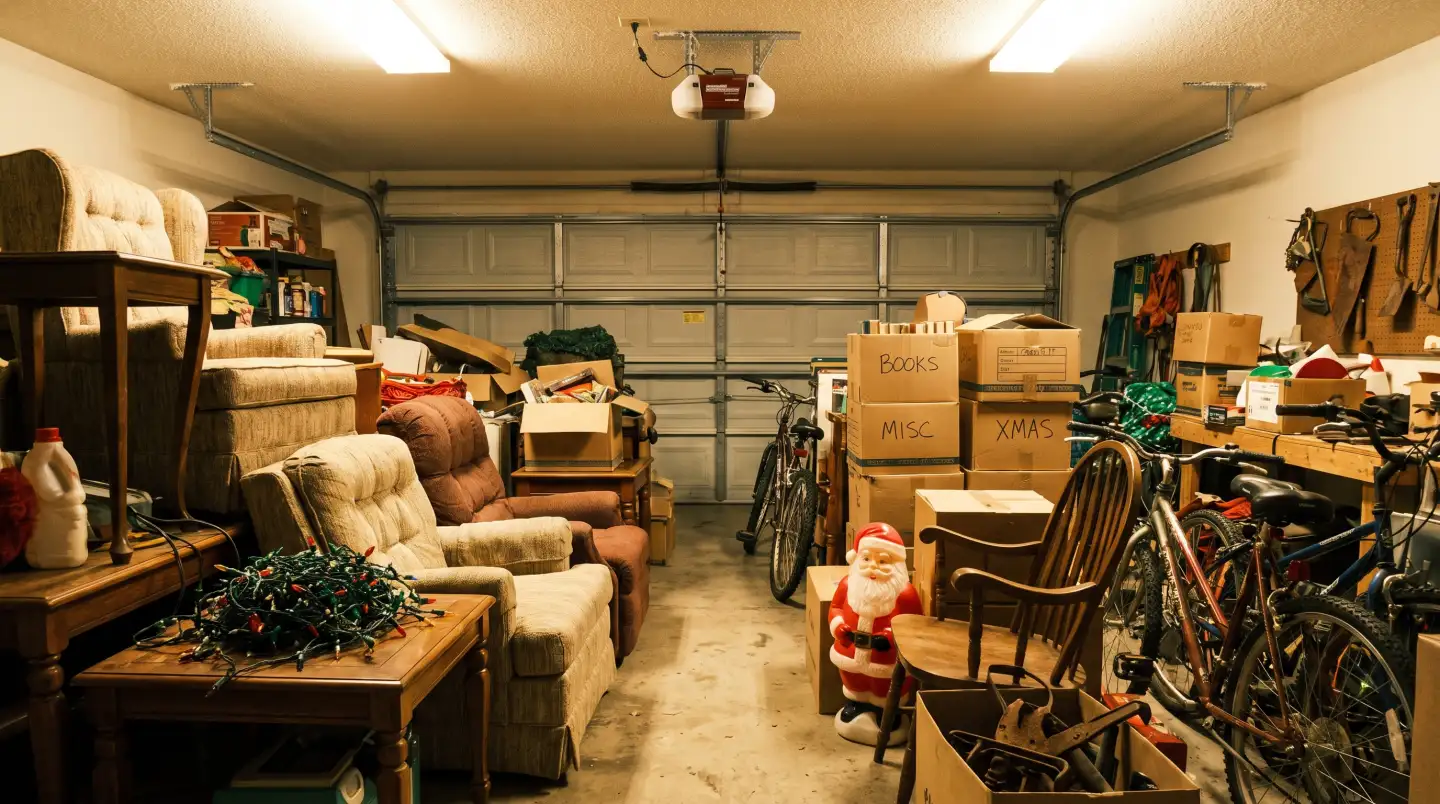
Clearing a loved one’s home is a job nobody wants and nearly everyone eventually gets. Having done this alongside many families, here is the order of operations that keeps it manageable — practically and emotionally.
Step 1 — Secure the paperwork first
Before anything leaves the house, gather documents: wills, deeds, titles, insurance policies, tax records, and anything official-looking. Check the classic hiding spots — desk drawers, closet shelves, under mattresses, coat pockets, and the freezer (genuinely). Set up one box that never leaves your sight.
Step 2 — Walk it with the family, once
One walkthrough where everyone flags what they want — photographed and listed, so there are no surprises later. Set a deadline for pickup. Open-ended “I’ll come get it eventually” is how estates stay frozen for a year.
Step 3 — Triage in three piles
- Keep — sentimental and practical items claimed by family.
- Donate / sell — clean furniture, kitchenware, books, tools. An estate-sale company earns its fee if there is enough of value; otherwise donation is faster and kinder to your energy.
- Let go — everything else. This pile is always bigger than expected, and that is okay.
Step 4 — Do not rush the sentimental layer
Photo albums, letters, and the box of report cards deserve a slower pass than the garage shelves. Do the emotional rooms early in the day when you have patience, and the storage areas later when you just want progress.
When you’re ready for the heavy part, we’ll handle it gently.
Talk through a cleanoutStep 5 — Call in help for the last mile
Once keepsakes are out, a professional cleanout crew turns weeks into a day. Ask any company you consider: Do they donate in the family’s name and provide receipts? Do they set aside anything sentimental they find? Is the crew comfortable working without judgment in a house that has been lived in hard?
Estate and hoarding cleanouts are some of the most meaningful work we do. We photograph anything that looks like it matters, donate first, and leave the house broom-clean — so the last memory of the place is not a dumpster in the driveway.
What estate cleanouts cost, honestly
Families ask hesitantly, so let us be direct about the shape of it. Estate cleanouts price like any volume job — the house’s contents measured in truckloads — with the honest variables being total volume, access (stairs, distance to the truck), and how much sorting care the family wants. More care costs more time and is worth it. What should reduce the bill: everything donatable that leaves as donation instead of disposal, and metal that leaves as recycling. Ask any company you interview whether their pricing reflects diversion — it tells you quickly whether “we donate” is a practice or a brochure line. And get the quote confirmed before work begins, like any job; grief is no time for drifting invoices.
Working with a realtor’s clock
If the home is heading to market, your cleanout is on the listing photographer’s schedule, and empty rooms photograph dramatically better than furnished-with-history ones. Agents consistently want the same sequence: cleared, then deep-cleaned, then photographed — with a buffer day between each. Build the plan backward from the photo date and tell your cleanout crew about the deadline up front; end-of-job flexibility is easy to promise on day one and expensive to improvise on the last day.
The paperwork you will be glad you kept
Beyond the obvious legal documents, three categories earn their keep during an estate transition: house records (appliance manuals, warranty folders, paint colors, the name of the furnace person), keys and openers (label every mystery key — one of them is the shed), and utility account details for the shutoff-or-transfer calls. We find these scattered through every estate we clear, and we set them aside automatically — but knowing to look for them puts you a week ahead.
A note on timelines
If the house is going on the market, work backward from the listing date: paperwork and family walkthrough (week one), triage and donations (week two), cleanout and clean (a day or two). If there is no deadline, be kinder to yourself than the calendar is.