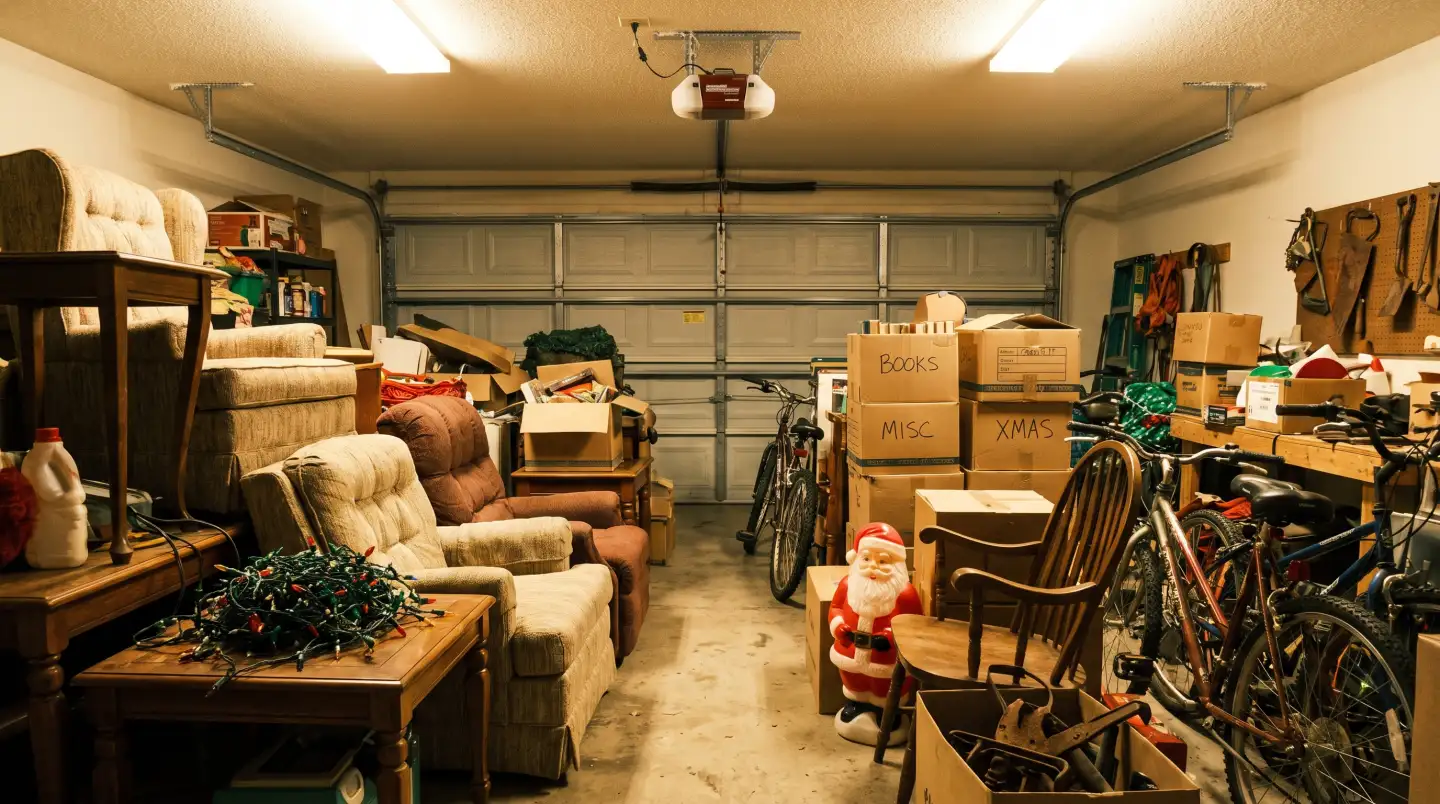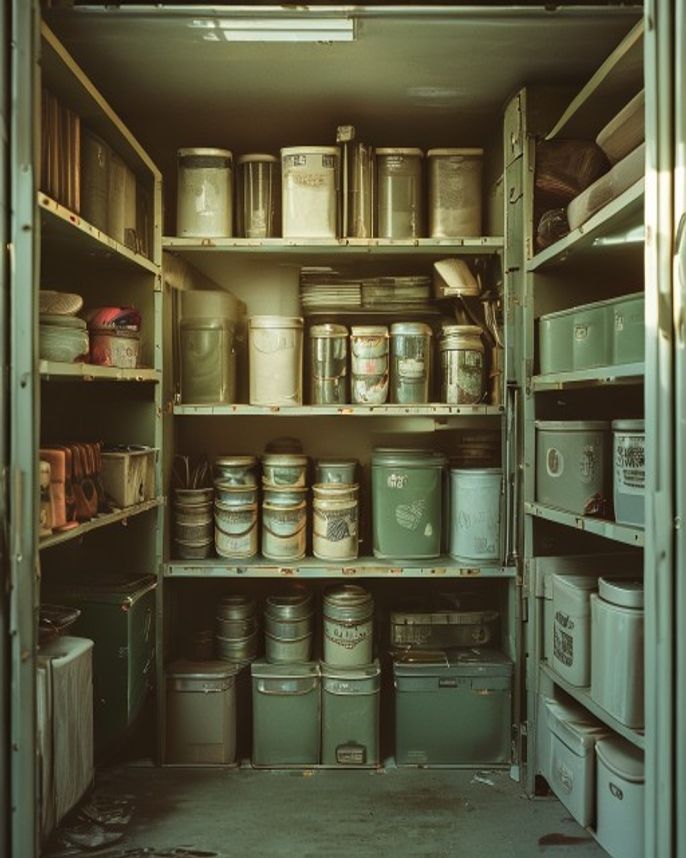
If someone you love is living in a home that has filled past comfort, past safety, maybe past the point where you can visit — this is for you. We are haulers, not therapists, and we will stay in our lane on the clinical side. But we have stood in a lot of these living rooms, and we have watched families get this right and get this wrong. The difference is rarely about effort. It is about order of operations.
Read this first
Hoarding is recognized as a mental health condition — not laziness, not stubbornness, not a housekeeping opinion. The stuff is doing a job for the person: safety, memory, possibility, control. That is why the obvious fix (“we will just clear it while she is at her sister’s”) is not a fix at all. You cannot throw away the reason the pile exists.
Go slow to go fast. Trust is the only tool that scales.
The mistakes that make it worse
- The surprise cleanout. Clearing a hoarded home behind someone’s back is experienced as a violation, not a favor. It reliably destroys trust, often escalates the behavior, and can end contact with the one person positioned to help. However tempting, do not.
- Arguing item by item. “You have four of these” is a losing debate format. The person is not confused about the count; the object is doing something logic does not touch.
- Ultimatums early. Sometimes safety forces a hard line — but as an opening move, ultimatums produce defense, not change.
- Measuring progress in truckloads. If day one targets “half the house,” day two will not happen.
What actually works
Start with safety, not stuff
The first goals are boring and life-saving: clear paths to exits, a working stove and sink, a bed that can be slept in, smoke detectors that can be heard. “Let’s make sure you could get out fast if you needed to” is a goal a person can share without surrendering anything they love.
Let them hold the veto
The person decides what leaves. Your job is logistics and steadiness, not judgment — one raised eyebrow can end a session. (This is also our crew rule on every job, hoarded or not: zero judgment, ever.)
Use a “maybe” box
Decisions get easier when they are reversible. A box for not-yet-decidable items — sealed, dated, revisited in a month — lowers the stakes of every choice. Most maybe-boxes never get reopened, and that is fine; the point was the momentum.
Work in two-hour sessions
Decision fatigue is physical. Two focused hours with water, snacks, and a hard stop beats a heroic eight-hour push that ends in tears and a canceled next visit. Celebrate the cleared corner, not the remaining rooms.
Need muscle that won’t judge? That’s our whole thing.
Talk through a cleanoutWhen and how to bring in help
Two different kinds of professionals matter here, and they are not interchangeable:
- For the person: therapists experienced with hoarding disorder, and — where safety or age is a factor — local resources like county aging services or adult protective services can coordinate support. If there is a case manager involved, loop them in early.
- For the stuff: a hauling crew that works at the family’s pace, follows the veto rule, sets aside photos and documents without being asked, and donates in the person’s name. Ask any company directly: “How do you handle hoarding jobs?” The wrong answer is a speech about tonnage.
On our estate and hoarding cleanouts, the pace belongs to the family. We have paused mid-job for a shoe box of letters, and we consider that the job going right.
Scripts that help (and ones that hurt)
Words carry most of the weight in these conversations. Phrases we have watched work, standing in living rooms while families navigated this:
- Instead of “Look at this mess” → try “I want you to be safe here — can we start with a path to the door?”
- Instead of “You never use this” → try “If this could help another family right now, would you want it to?” (Donation reframes release as generosity, which is why it works.)
- Instead of “We’re throwing this away” → try “You decide — keep, maybe box, or bless someone else with it.”
- Instead of “Why do you keep all this?” → try saying nothing and moving the next box where they point. Questions that start with why put people on trial.
And the one to retire completely: any sentence beginning “You should just…” Nobody in the history of overwhelmed houses has been should-justed into wellness.
Take care of yourself, too
Supporting someone through this is long-haul work, and caregiver burnout helps no one. Set a sustainable rhythm — monthly sessions you can keep beat weekly ones you will cancel. Share the load with siblings or friends on a rotation. And let some sessions be visits with no agenda at all; if every appearance comes with a garbage bag, you become the garbage bag. The person needs you durable more than they need you heroic.
What a first visit with a hauler should look like
Families are often nervous about this step, so here is how it goes when it goes right. The first visit is a conversation, not a cleanup: a walkthrough at whatever pace the homeowner sets, rooms entered by invitation only, and nothing — nothing — touched or bagged. A good crew talks in zones (“this hallway first, maybe the kitchen next visit”), prices in ranges the family can plan around, and volunteers its rules unprompted: the homeowner holds the veto, sentimental finds get set aside, donations happen in the family’s name, receipts follow.
What you should never hear on a first visit: tonnage bragging, before-and-after photos of other people’s worst days used as sales material, or pressure to “do it all while we’re here.” The right crew treats the trust as the deliverable and the hauling as the easy part. Interview us or anyone else with exactly that bar.
After the cleanup
A cleared house is the middle of the story, not the end. Without support, refill is common — so the win worth protecting is the relationship and the routine: regular visits that are about the person rather than the piles, small maintenance sessions, and genuine celebration of the space that stays open. The garage floor matters less than the fact that you are both still standing on it together.
If you are in the thick of this right now: you are not failing, and neither are they. Go slow. It goes faster that way.