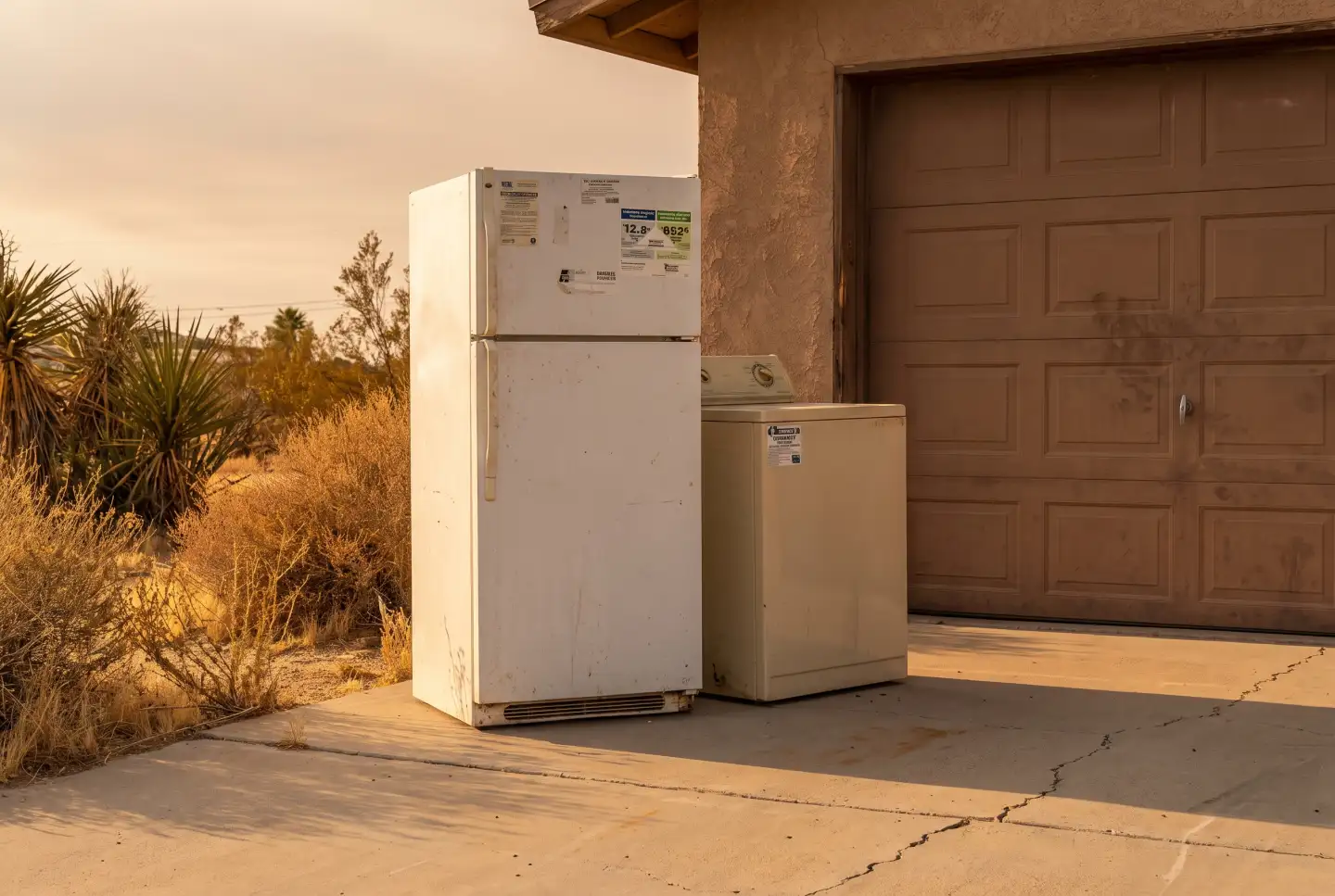
Appliances are where junk disposal meets federal law, scrap value, and one genuinely important child-safety rule — all in a single dented fridge. Here is how to retire each machine in Reno properly, whether you use us or your own truck.
The Freon rule, in plain English
Refrigerators, freezers, window AC units, and dehumidifiers contain refrigerant — and federal law (Section 608 of the Clean Air Act) says that refrigerant must be recovered by certified technicians before the unit is scrapped. That is why:
- You cannot put a fridge in a rented dumpster,
- Scrap yards refuse them unless the refrigerant is documented as recovered, and
- Every legitimate hauler charges a little more for “cold” appliances — the recovery step is real work by a certified tech.
None of this is bureaucratic fussiness: vented refrigerant is a potent greenhouse gas, thousands of times more warming than CO₂ pound for pound. The rule is one of the quietly effective environmental laws — worth respecting.
Appliance by appliance
| Appliance | The right ending |
|---|---|
| Fridge / freezer | Certified refrigerant recovery, then metal recycling — the steel is valuable |
| Washer / dryer | Nearly all metal by weight; a scrap yard favorite. Working pairs donate well |
| Water heater | Pure scrap value — never landfill weight |
| Stove / oven | Metal recycling; gas models need the line capped by someone competent first |
| Dishwasher | Mixed material, mostly recoverable; disconnect is simple but wet |
| Microwave / small appliances | E-waste stream, not the trash — capacitors and boards get processed separately |
The pattern: almost no appliance deserves a landfill. Steel is endlessly recyclable, and the scrap market genuinely wants your dead washer. When we haul appliances, metal recycling is the default route — it is one of the easiest diversion wins in this business.
Fridge, freezer, Freon — handled properly.
Price my appliance pickupIf it still works, stop
A working appliance is not junk — it is a donation with a tax receipt attached. Working fridges, washers, and stoves are among the most-requested items at Reno-area charities and shelters, because they are exactly what a family setting up a first apartment cannot afford. Before you retire a working machine, check three things: it runs, it is reasonably clean, and the door seals are intact. If yes, donate it — or book us and say “this one works”; donation becomes its first stop.
Also worth a look before you toss a working fridge: utility companies periodically run appliance-recycling rebate programs that pay you to retire old energy hogs. Offers come and go — a two-minute check of your utility’s current programs costs nothing.
Two safety rules worth knowing
- Take the doors off stored fridges and freezers. An unattended fridge with a latching door is a documented child hazard — it is the reason old fridges legally require door removal before curbside storage in most places. Thirty seconds with a screwdriver.
- Cap gas lines like you mean it. Disconnecting a gas dryer or stove is simple, but the line cap is not optional and “hand-tight” is not a torque spec. If you smell anything, stop and call the pros.
The DIY scrap run
For non-refrigerant appliances, hauling to a scrap yard yourself is legitimate and occasionally even pays — steel prices fluctuate, but a washer-dryer pair is real weight. Prep matters: drain the washer completely (tip it back, not forward, unless you enjoy mystery water), tape doors shut for transport, and pull any obvious plastic bins or glass shelves — yards want metal. Call ahead about what they accept from walk-ins and whether they require ID; most do, as scrap-theft law tightened everywhere.
The honest accounting from our cost guide applies here too: truck, straps, fuel, the line at the yard, and a payout that often lands in coffee-money territory for a single machine. It is a fine errand if you enjoy it. It is not a profit center.
A word about the garage beer fridge
The second fridge in the garage is a Reno institution and an energy vampire. Older units — especially pre-2000 models doing summer duty in a 100° garage — can add a surprising line to a power bill, which is exactly why utility rebate programs periodically pay people to retire them. If yours mostly chills half a case of something and a bottle of ketchup, run the math: the rebate check plus the bill savings frequently beats the sentimental value. When it goes, it goes the certified-recovery route like any fridge — no exceptions for beer service.
Landlords and property managers
Appliance swap-outs are one of the most common commercial jobs we run: a unit turns over, the new set arrives, and the old set needs to vanish on the same day without blocking the make-ready schedule. If you manage multiple doors, batch them — a garage bay of retired appliances is one efficient pickup instead of five awkward ones, and everything metal still takes the recycling route. Commercial scheduling works around your vendors, not the other way around.
The pickup-day prep checklist
Five minutes of prep the day before makes any appliance pickup boring — which is the goal:
- Freezers and fridges: defrost 24 hours ahead and prop the door with a towel underneath. A sealed, frosty freezer becomes a water feature in transit.
- Washers: disconnect and drain the hoses, then tape them to the drum. The last gallon always hides in the pump.
- Gas appliances: shut the valve and confirm the cap. If anything smells off, stop and get qualified help before pickup day.
- Clear the runway. Appliance dollies need a door-wide path; a moved rug and a propped door save ten minutes of shuffle.
- Secure the pets. Every crew has a story about a cat, an open door, and a fridge-shaped distraction. Give yours a closed bedroom and everyone relaxes.
Quick answers
Why do haulers charge extra for fridges?
Certified refrigerant recovery is legally required before scrapping — the surcharge pays for that step, not for the lifting.
Can appliances go in a rented dumpster?
Non-refrigerant appliances usually can (they are heavy, so mind the weight allowance). Anything with refrigerant cannot — book it as a separate pickup.
Do you take dead microwaves and small stuff?
Yes — they ride along with any pickup and get routed to e-waste processing, not the pit.